

The SonicPhonics Handwriting Playground
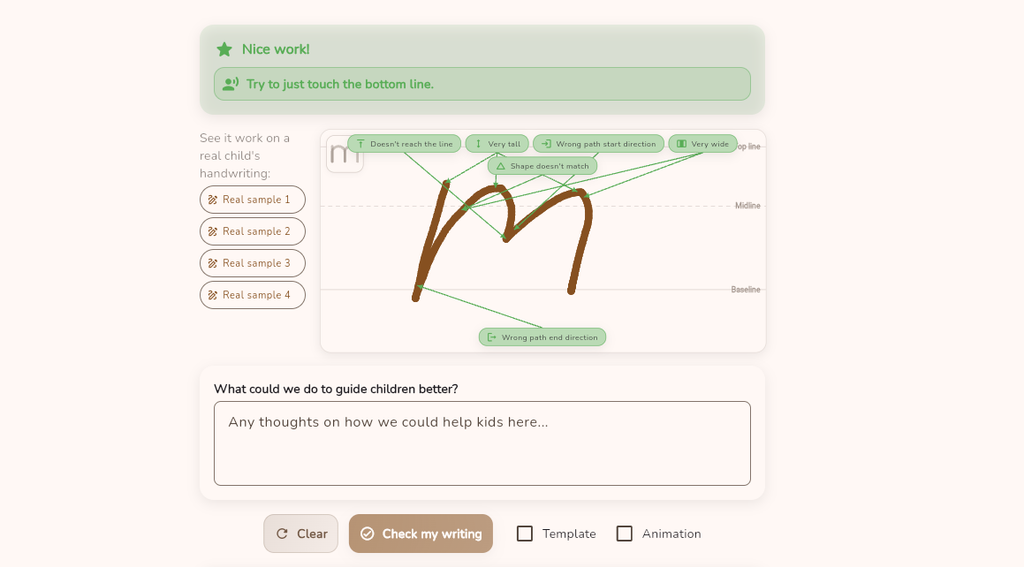
What if you could see exactly how a child’s handwriting is being analysed as they write?
We’ve been working on something new at SonicPhonics: the SonicPhonics Handwriting Playground, a new space within our Teacher Tool where teachers, parents and students can try our handwriting technology for themselves. It’s an opportunity to experience the technology behind our handwriting activities and see how SonicPhonics looks at a child’s writing, analyses it, and provides feedback based on the handwriting expectations we have developed for New Zealand learners.
Our handwriting tool has gone through many iterations as we’ve worked to develop technology that can look at a child’s writing and provide meaningful feedback, rather than simply asking whether something looks vaguely like a letter. Children are learning much more than what a letter looks like.
They are learning where to start, which direction to move, how letters are formed, how they sit within their writing space, and how to reproduce those shapes consistently. This is why we wanted our handwriting technology to look at the process of letter formation as well as the finished result. SonicPhonics is designed in New Zealand, for children learning in New Zealand classrooms, with our handwriting activities developed around New Zealand letter formation expectations and our wider literacy approach aligned with the way children are taught in the classroom.
Our handwriting activities use a gradual progression from modelling and guided practice through to tracing and eventually independent writing, giving children opportunities to build confidence before being expected to form letters independently. The Handwriting Playground gives teachers, parents and students the chance to explore the technology behind this process without needing to work through the full SonicPhonics learning sequence.
Simply write on the screen and see how SonicPhonics interprets the attempt. One of the biggest challenges with independent handwriting practice is that children can unknowingly practise an incorrect formation repeatedly. By the time an adult sees the work, the child may have already repeated the same movement many times.
SonicPhonics is designed around the idea that feedback should happen during practice, not only afterwards. The goal isn’t to replace the teacher, but to give children another opportunity to practise accurately when a teacher isn’t able to sit beside them. We know that saying “our AI analyses handwriting” is very different from actually seeing it happen, which is why we created the Handwriting Playground.
Teachers can explore it before introducing the technology to their students, parents can see how SonicPhonics approaches handwriting, students can have a go themselves, and literacy specialists can explore how the technology responds to different handwriting attempts.
Think of it as a test drive of our handwriting technology. We also don’t see handwriting analysis as a finished problem. There are huge variations in the way children write. Some write large, some write small, some are still developing their fine motor control, and some children may know what a letter should look like but struggle with the physical process of forming it. That’s why we have continued to test, refine and improve our handwriting technology through many iterations.
We’re continually asking: can we make the feedback more accurate?
Can we better reflect the way children are actually taught to write?
Can we help children correct mistakes earlier?
And can we make independent practice more useful for teachers?
These questions continue to guide the development of SonicPhonics.
The best way to understand the Handwriting Playground isn’t to read about it. Have a go yourself. Write some letters, try different formations, see how the system responds, and think about what this could mean for the children in your classroom or at home. Try the SonicPhonics Handwriting Playground.
The Handwriting Playground is part of our wider goal at SonicPhonics: to give children more opportunities to practise literacy skills independently, while giving teachers technology they can actually use and trust. We’re still developing, testing and improving, and we’d love to hear what you think.
How do we work?
Glad you asked!
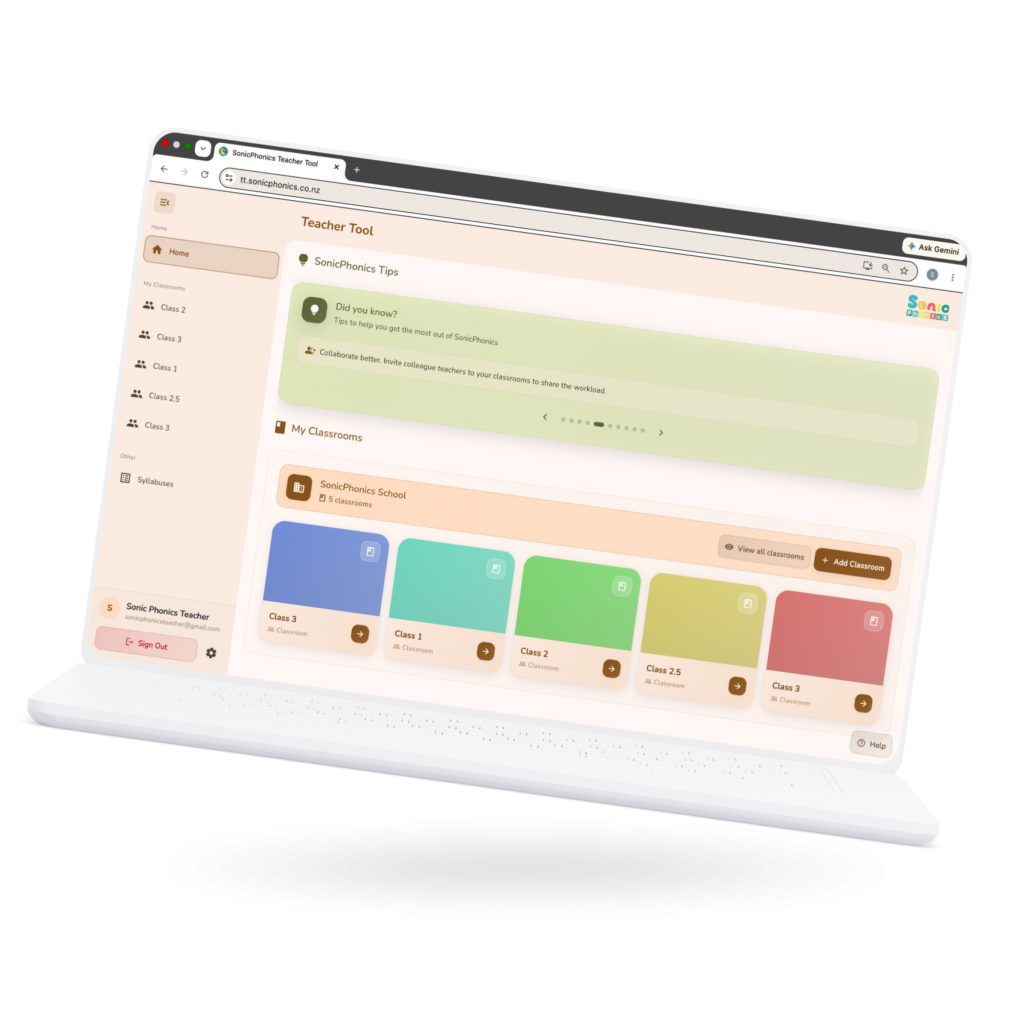
First, guide learning and track progress via our Teacher tool.
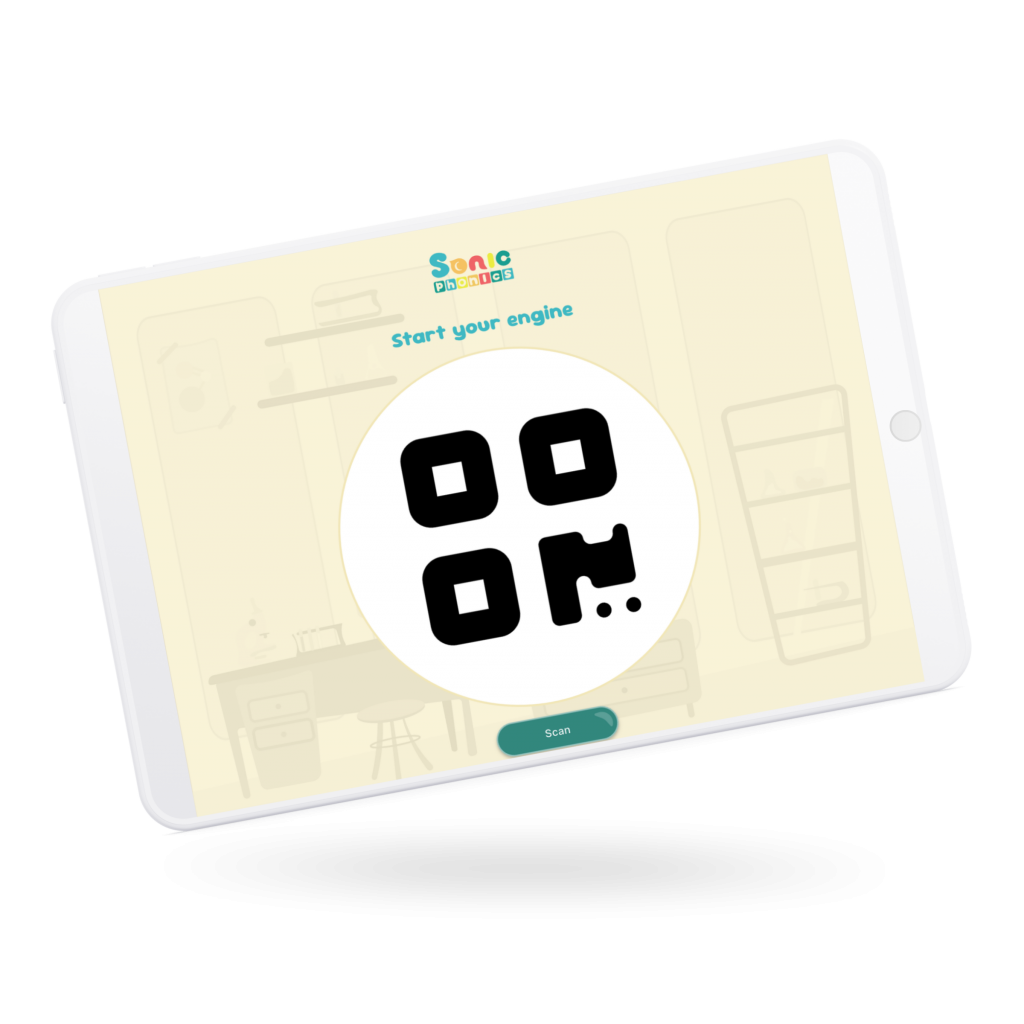
Then, build confident readers through practice, with our SonicPhonics app.